Midlife Ultra: What Running 106 Miles Around Kielder Water Really Felt Like
Four loops, four marathons, more than 10,000 feet of climbing and 35 hours on our feet. This is what our self-supported 106.25-mile challenge around Kielder Water really felt like—and why we did it for CALM.
Q: What would you do to celebrate?
A: I run. Run over 100 miles around Kielder Water…
On 28 July 2026 (my 43rd birthday) Terri and I set out to run 105 miles around Kielder Water.
Four continuous loops. Four marathons. More than 10,000 feet of climbing. No organised event, no official aid stations and no support crew making decisions for us.
Just the two of us, months of training behind us, and our motorhome, Peanut and our car, parked beside the route as our homemade aid station.
Thirty-five hours later, we finished.
Although, in typical fashion, we somehow turned a 105-mile challenge into 106.25 miles.
Before beginning our fourth and final loop, neither of us could remember whether we had locked Peanut. After already covering around 80 miles, we had no choice but to turn around and run back to check.
Because apparently 105 miles was not going to be enough. 😂
Why we decided to do it.
Midlife Ultra started partly as a weight-loss journey for me. I had put on almost 10 kilograms during a long break from running, and I wanted to find out what I could still do after turning 43.
Earlier this year, while we were out on a run, I started wondering what to call the challenge. Terri said, “Midlife Ultra.” It sounded just right, so we went with it.
But somewhere along the way, the challenge became about much more than losing physical weight.It became about the weight we carry that other people cannot always see: stress, grief, addiction, fear, financial pressure, loneliness, past experiences and thoughts we may struggle to say out loud.
We are not professional athletes, just two ordinary people trying to live a happy life. Most of our lives involve working, traveling in Peanut, looking after Coco and trying to keep ourselves moving in the right direction.
We also both know what it feels like when your own mind becomes a difficult place to live. Between us, we have experienced everything from the average bad day to the far extremes.For us, having something meaningful to work towards creates structure. It gets us outside, gives us a purpose and stops us spending quite so much time trapped inside our own heads.
Running does not fix everything, and it certainly is not the answer for everybody. But movement, shared challenges and having something positive ahead of us help. Structure helps too, as can any kind of physical activity.
That is why we chose to raise money and awareness for CALM (Campaign Against Living Miserably).
The theme behind the challenge became:
The Weight We Carry,
Whatever that weight may be, nobody should have to carry it alone.
Preparing for our first 100 mile run.
Nineteen weeks of training
We trained specifically for Midlife Ultra for 19 weeks. We were not starting from nothing, we had run a few miles before but nothing like this. Not even close. We were returning after a significant break from regular running, and there was a lot of work to do.
Over those 19 weeks, we ran more than 550 miles. We completed marathons in different locations: from Leeds to Skipton along the canal bank, through Kielder Forest and, of course, around Kielder Water. We covered long stretches of the Leeds and Liverpool Canal, miles of forestry tracks and two marathons on consecutive days.
By the later stages of training, we had completed seven marathons in eleven weeks. June alone totaled around 165 miles.
Not every week went well. My right knee caused problems. My Achilles, ankles and heels all had their moments. Terri had her own ongoing knee issues. Some runs left us feeling confident, while others made us wonder whether we had taken on far too much.
Training also had to fit around real life. We work long days at a campsite, particularly at weekends, so some runs happened after work, late at night and in whatever weather Northumberland decided to throw at us.
We trained in rain, frost, hail, wind and darkness.
Strength training was not always as consistent as we would have liked. The nearest gym was around 35 minutes away, so we used dumbbells, weighted vests and whatever exercises we could manage at home.
By the final two weeks, however, the work was done. There was no fitness left to gain without risking arriving at the start more injured than prepared. We reduced the mileage and concentrated on mobility, stretching, careful gym sessions, sauna, cold therapy, massage, food and sleep.
We had considered hiking the Yorkshire Three Peaks twice in one day as one final big session, simply to spend a very long time on our feet.
Thankfully, common sense appeared briefly and we cancelled it.
Being another five per cent fitter would have meant very little if we arrived at the start twenty per cent more injured.
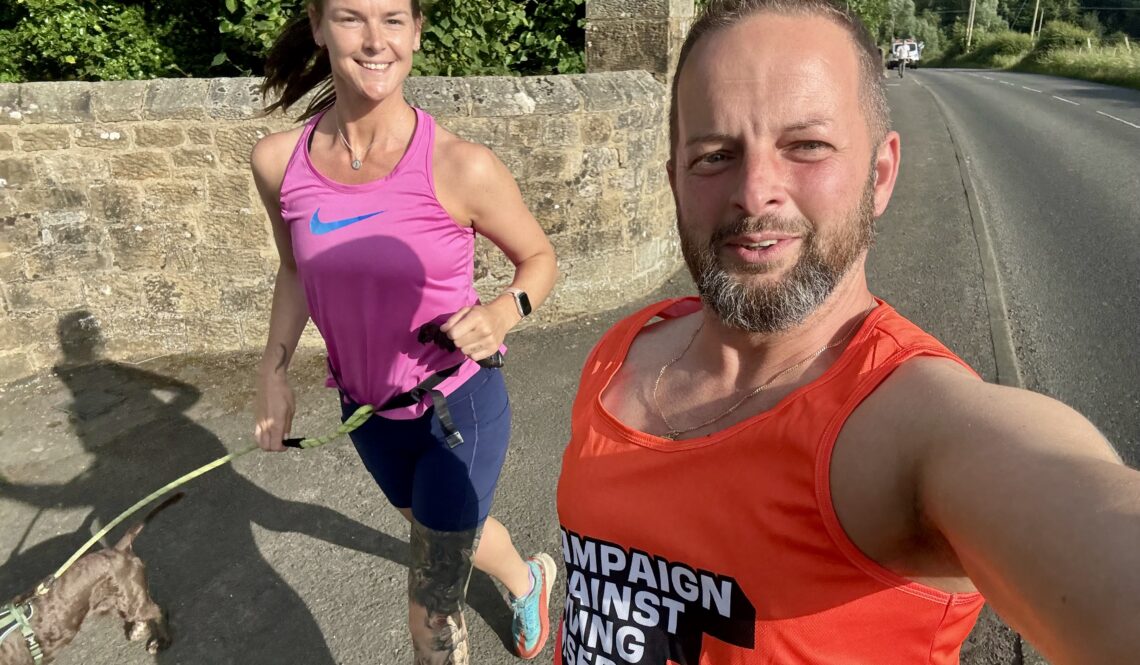
On our first loop..
Turning Peanut into an aid station.
Because this was not an organised race, everything had to be planned by us. There would be no official aid stations, no medical tent and no race crew waiting to solve problems.
Peanut became our ultra-running headquarters.
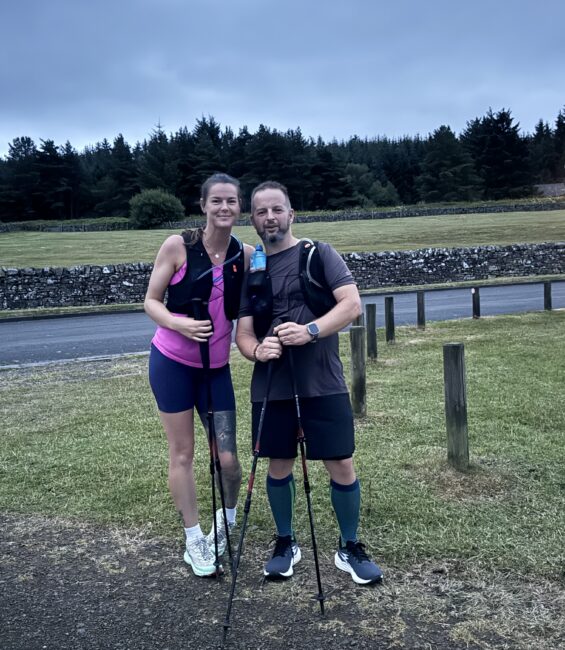
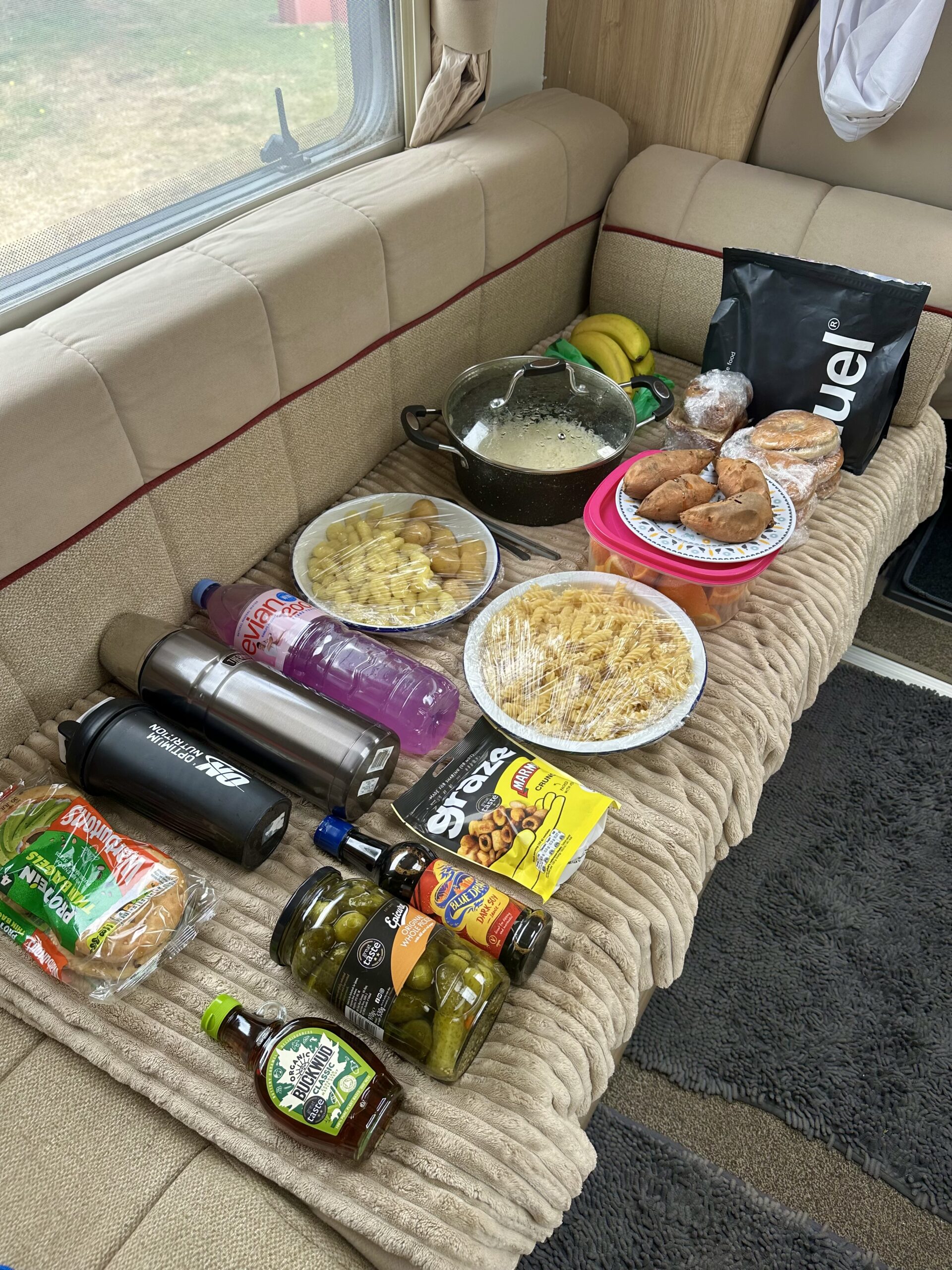
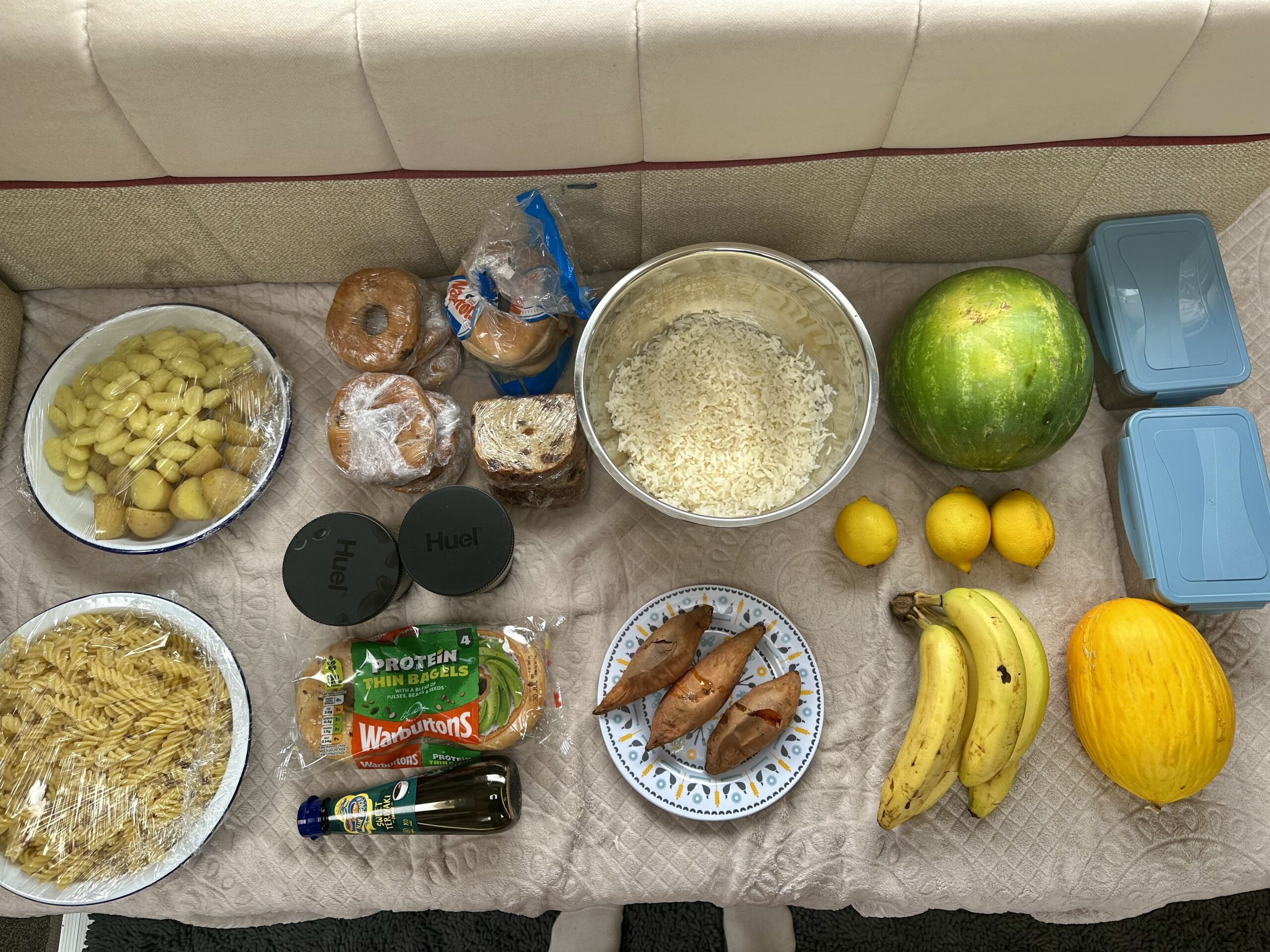
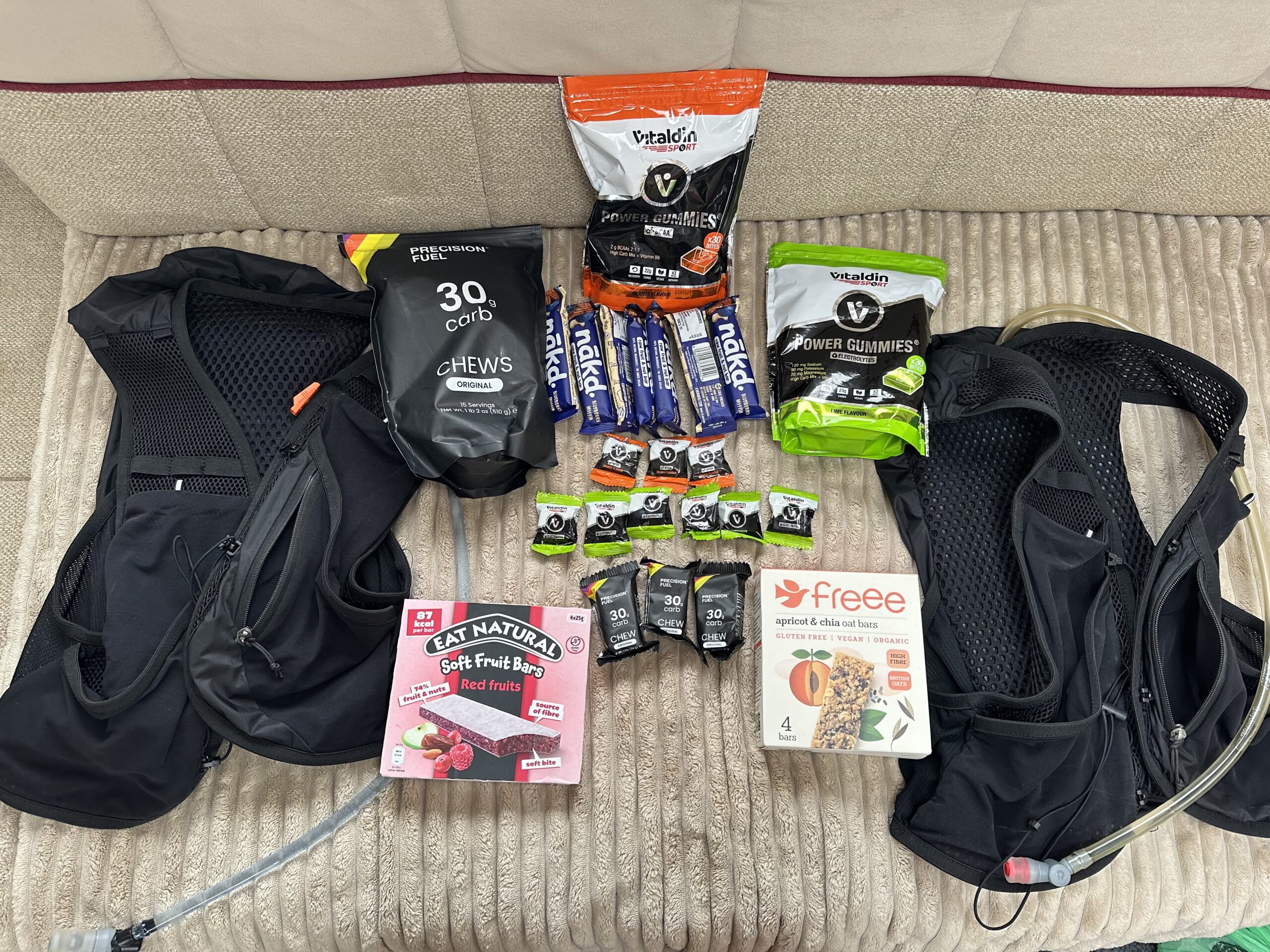
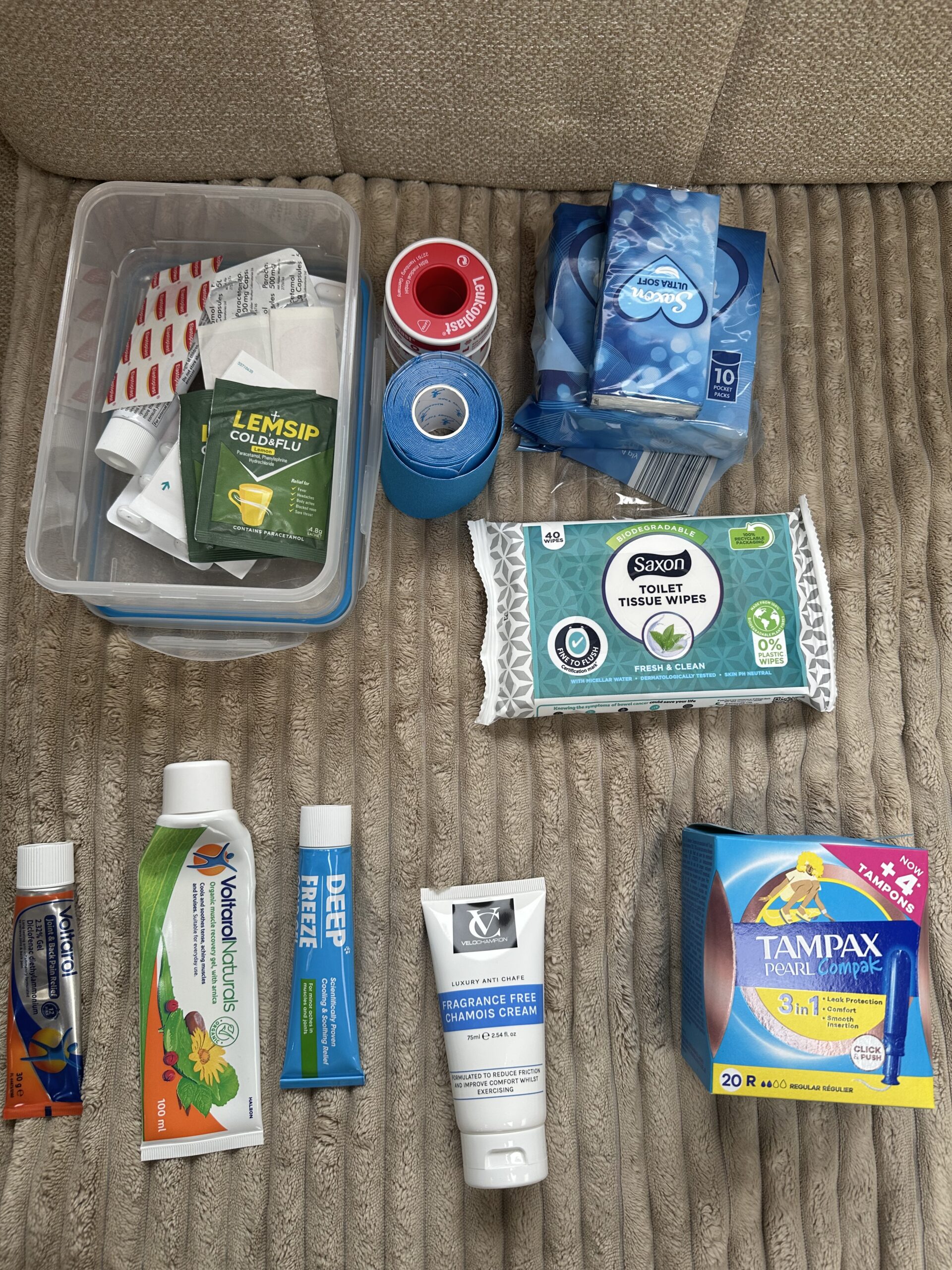
We packed food, water, electrolytes, spare clothing, shoes, socks, poles, head torches, batteries, blister supplies, tape, anti-chafe cream, power banks, charging cables, phones, watches and cameras.
There were containers of rice, pasta, potatoes, sweet potatoes, bagels, bananas, melon and other fruit. We also packed Huel, fruit bars, salty snacks, pickles, sugary drinks, Precision Fuel chews, gummies and electrolyte products.
Then came the medical box: blister dressings, tape, antiseptic products, pain-relief gel, wipes, tissues, chafing cream and a collection of other items we had convinced ourselves might save the day somewhere around mile 90.
We prepared for painful feet, stomach problems, exhaustion and changing weather.
We had not specifically prepared for forgetting to lock the motorhome or removing a tick from Terri’s leg.
You cannot plan for everything.
The challenge begins...
The First Loop, aka the first Marathon.
We started on Tuesday morning.
Thinking about the full 105 miles felt almost impossible, so we tried not to. The job was to complete one loop. Then another. Then another. And then, somehow, one more.
The early miles felt controlled. We moved steadily, ate, drank and tried not to get carried away by feeling reasonably good.
At around 30 miles, we had been moving for roughly seven hours. Our average pace, including breaks, was around 13 minutes and 52 seconds per mile. At that stage, we were still discussing whether finishing within 24 hours might be possible.
It was not.
The elevation, the stops at Peanut, the accumulated fatigue and the reality of what we were doing gradually changed the calculation.
Once we let go of the 24-hour target, the pressure lifted. Chasing it had started to kill the joy of the experience, and it felt much better to run without that hanging over us.
The original time target stopped mattering. Finishing became the only target left.
Eating our way around Kielder
Our plan was to take in approximately 60 to 90 grams of carbohydrates per hour, with fluid adjusted according to the weather, our thirst and how much we were sweating. We estimated that we might need around 8,000 calories each during the challenge. According to our smart devices, we each burned well over 12,000 calories in total, so much for that estimate.
We used a mixture of sports nutrition and normal food. Chews and gummies were useful because they were easy to carry and quick to eat, but after hours of sweet food, the thought of another sugary mouthful became increasingly unappealing.
That is where the potatoes, rice, pasta, bagels, fruit and salty foods helped.
During a long ultra, your appetite becomes unpredictable. Something you were excited to eat beforehand can suddenly feel impossible to swallow. Meanwhile, a plain boiled potato can briefly become the greatest meal ever created.
The plan was not to eat perfectly. The plan was simply to keep energy going into our bodies. We ate small amounts whenever we could. There was no magical food that carried us through the entire challenge.
Although, during the fourth loop, we had two orange Calippos and honestly, they performed something very close to a miracle. Cold, sweet and easy to get down, they gave us exactly what we needed at that moment.
Most of the time, however, it was not one big meal or one special product that kept us going. It was the accumulation of small amounts, hour after hour.
When it became something else entirely
After 57 miles
The first half was hard.
The second half was something else entirely.
At around 57 miles, every problem seemed to become louder. Our feet hurt more. Our muscles stiffened. Small discomforts became much harder to ignore, and the remaining distance still felt enormous.
The challenge was no longer mainly about cardiovascular fitness. It became about managing pain, staying awake, continuing to eat and refusing to become overwhelmed by how far we still had to go.
Thinking about another 40 or 50 miles while already exhausted was frightening, so we tried to shrink the challenge.
Reach the next bend. Get to the next food stop. Complete the next mile. Eat something. Drink something. Fix whatever was hurting. Stand up. Move forward. Repeat.
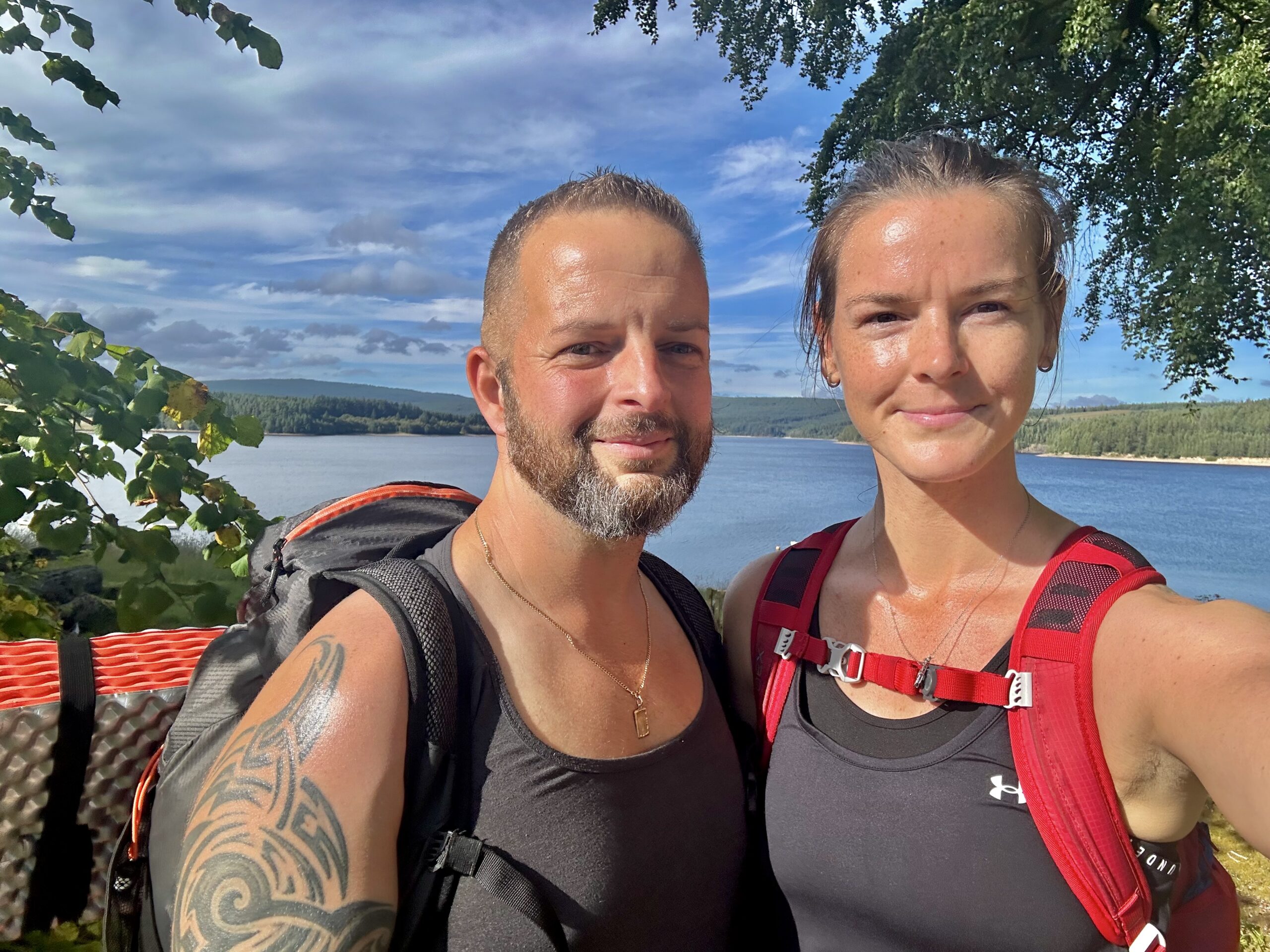
That sounds simple while sitting comfortably at home. It feels very different when you are going around the largest man-made lake in northern Europe again and again, and every familiar section reminds you just how far there is before you return to it.
Into the night
As darkness arrived, everything slowed down. The miles became longer. Stops became harder to recover from. Getting moving again after sitting inside Peanut took more and more effort.
Sometimes we ran. Sometimes we jogged. Sometimes we walked with the poles. Sometimes what we were doing was barely recognisable as running or jogging.
But we were still moving.
By then, the idea of finishing in 24 hours had disappeared. Then 30 hours began to look optimistic. The final elapsed time would eventually pass 35 hours.
There were difficult moments when stopping would have been the easiest decision. But stopping permanently and stopping briefly are very different things.
We allowed ourselves to slow down, eat, change clothes, solve problems and reset.
Then we went again.
The fourth and final loop
…and the forgotten lock
Starting the fourth loop meant we had already completed three marathons.
That should have felt as though we were nearly finished. Instead, there was still an entire marathon left: 26.2 miles, or more than 42 kilometres.
Before leaving Peanut, we realised neither of us could remember whether we had locked it. We tried to think back, but neither of us could confidently say yes.
There was no choice but to turn around and check.
That little mistake added approximately 1.25 miles to the challenge, taking our final distance to 106.25 miles.
At the time, it was not funny. Now we are glad it happened. We can laugh about it, and somehow it makes the whole run even more special to us.
We had spent months planning food, hydration, clothing, technology, route logistics and emergency supplies.
Then we forgot whether we had locked the door.
Real life does not stop being real life just because you are trying to do something extraordinary.
Terri’s unexpected passenger
During our fourth and final loop, we discovered a tick attached to Terri’s leg. So, along with everything else, we had to deal with that too.
We had medical supplies for all sorts of problems, but we did not have the correct tick-removal tool with us. We stopped at a visitor centre, but they did not have the right equipment either.
Eventually, we reached Kielder Waterside, where the extremely helpful staff helped us sort it out.
It was another delay, another problem and another reminder that a self-supported challenge means dealing with whatever happens along the way.
There is no race organiser to solve it for you.
You stop. You work out what to do. Then you continue.
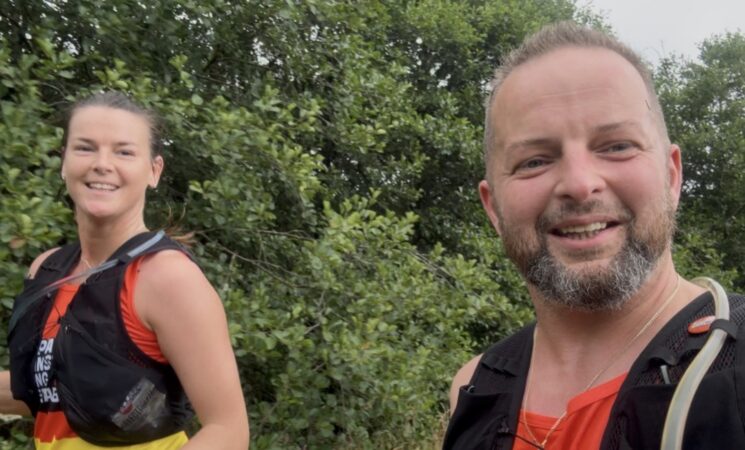
Surprise on our first loop.
The support that carried us
The scale of the support we received was something we had not fully expected.
People followed our live tracker and watched our little dot slowly move around Kielder Water. Some stayed awake through the night. People sent comments, messages and voice notes. They called us, shared the challenge and donated to CALM.
Some even travelled out to find us on the route, both during the afternoon and late at night, taking photographs and helping us share the story.
When we were moving well, people encouraged us. When we were barely moving at all, they encouraged us even more.
During some of the hardest miles, we would check our phones and see another message waiting. That message might have taken somebody only a few seconds to write, but we sometimes carried those words with us for hours.
Knowing that so many people were following us gave us another reason to take the next step. Then another. Then one more.
We ran the miles, but we absolutely did not do this alone.
Our supporters became an unofficial crew spread across the country and beyond. Together, we raised more than £1,000 for CALM and started conversations about mental health, suicide prevention and the invisible weight people carry.
That mattered far more than our finishing time.
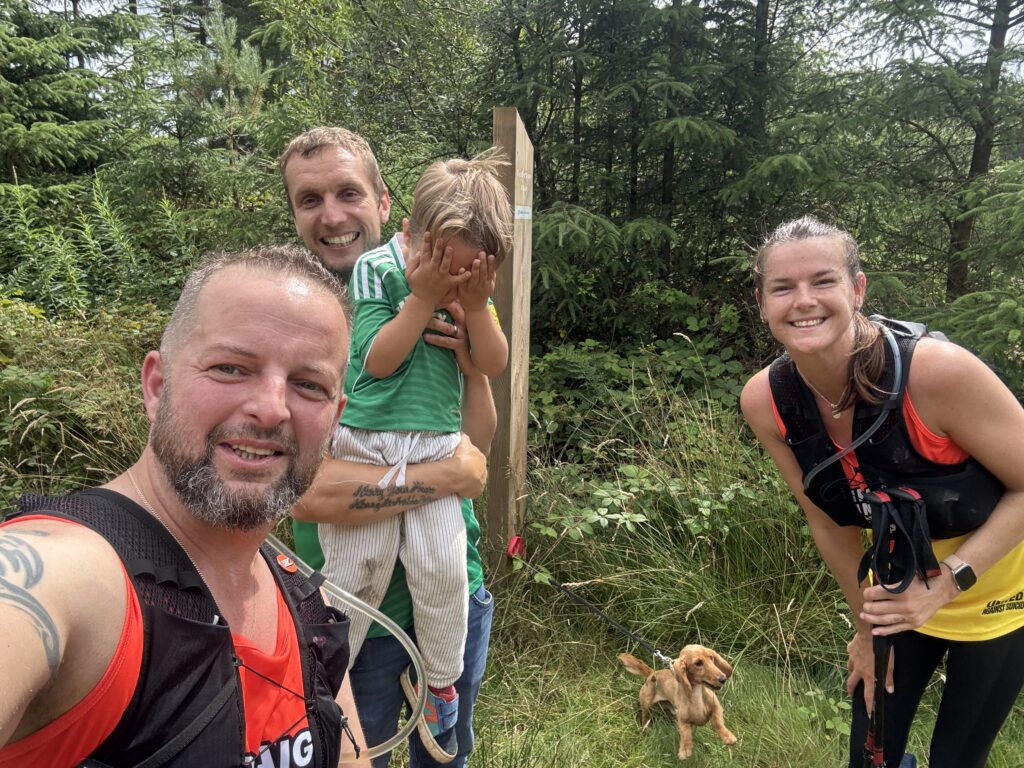
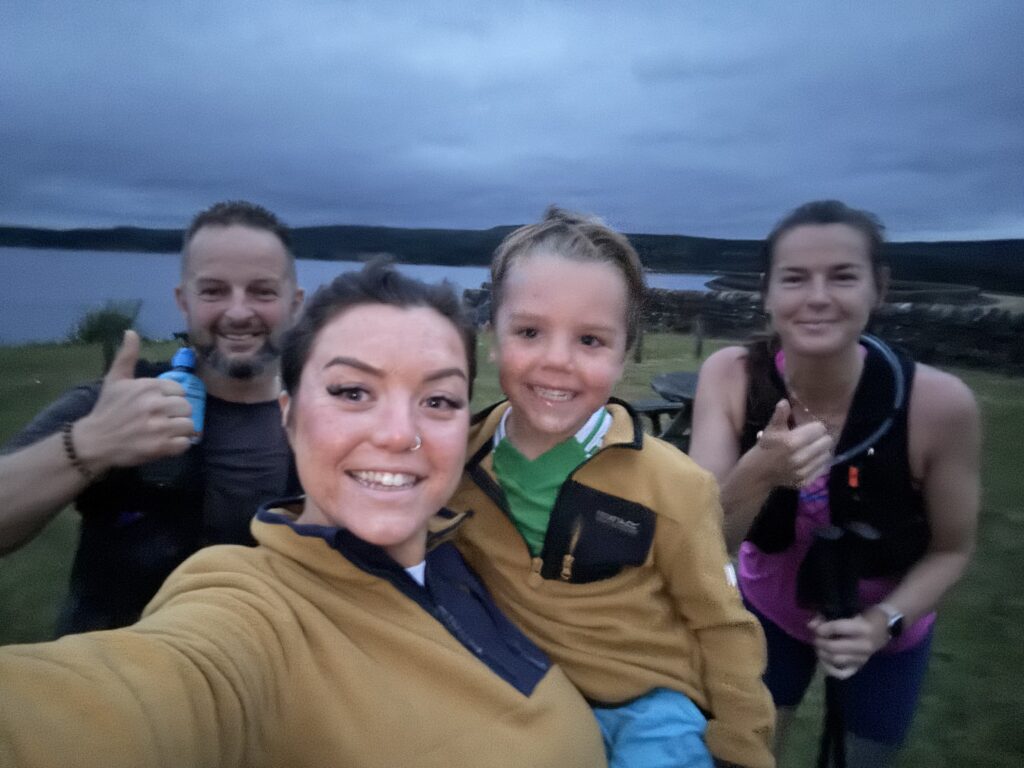
We had some friends who came to say hi
Reaching the Finish
The finish we almost forgot to photograph
We finally finished on Wednesday evening.
There was no official finish line. No announcer. No medal ceremony. We were so exhausted that we even forgot to take a proper finish-line selfie.
There was simply the knowledge that we had completed what we had set out to do.
Four loops around Kielder Water. Four marathons. More than 10,000 feet of climbing. And an extra 1.25 miles because somebody forgot to lock Peanut.
We were exhausted, sore and struggling to understand what had just happened.
After a few hours of sleep, we drove to Yorkshire to collect Coco from our family. Then, because apparently sitting still is no longer something we understand, we went for a short recovery run to get our legs moving again.
By Friday morning, we were back at work at the campsite.
106.25 miles done. Now back to work.
That probably sums up our life better than anything else.
The numbers
The final figures recorded on my watch were:
Distance
106.25 miles
Elapsed time
35 hours, 2 minutes
Moving time
30 hours, 6 minutes
Elevation gain
10,847 feet
Active calories
11,865
Total calories
15,576
Watch calorie figures are always estimates, but they give some idea of what the body went through.
What each of us ate
As best as we can remember, each of us got through roughly:
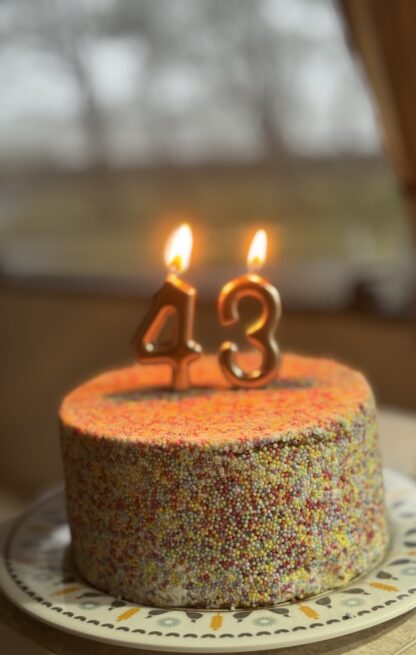
Breakfast was, Birthday cake and porridge for breakfast, with Huel, frozen berries and maple syrup then….
7 bananas
14 running gummies
4 vegan sausage rolls
Lots of rice
Lots of pasta
Lots of gnocchi
Lots of boiled potatoes
2 orange Calippos
5 bagels
6 fruit bars
5 oranges
1 Magnum
Written down like that, it sounds ridiculous. At the time, it was simply fuel.
The statistics are interesting, but they do not really explain the experience. They do not show the moments when we doubted ourselves, the food we struggled to swallow, the stiffness after every stop or the messages that made us smile in the middle of the night.
They do not show how far one mile can feel when you have already completed 90.
What we learned
Training matters, but adaptability matters just as much.
You can plan your food, pace, timing and equipment, but something unexpected will happen. A pain will appear. Your appetite will change. The weather may turn. You may forget to lock your motorhome. Your running partner may discover a tick in her leg.
The plan has to bend without the entire challenge breaking.
We also learned that the mind can make the remaining distance feel impossible. Thinking about another 50 miles is terrifying. Thinking about reaching the next bend is manageable.
Although, when you are travelling in circles, even the next bend can occasionally feel threatening. 😂
The distance was completed through hundreds of small decisions:
Eat. Drink. Change socks. Deal with the problem. Stand up. Move forward. Repeat.
And perhaps the biggest lesson was how much support can change what someone believes they are capable of surviving.
One more loop
We thought four loops around Kielder Water would be enough.
Apparently not.
The organisers of the official Kielder Marathon have invited us back as their guests on 4 October 2026. We gladly accepted.
It will be our fifth loop around the reservoir, although thankfully this time it will only be one marathon—with an organised event, official support and other runners around us.
We are treating it as a victory lap and another opportunity to support CALM.
Our JustGiving page will remain open until the end of October so the Kielder Marathon can become the final chapter of Midlife Ultra.
Thank you to everyone who shared our posts, followed the tracker, sent messages, called us, came out to meet us or simply believed we could finish.
Thank you to the staff at Kielder Waterside who helped us when we needed it.
Thank you to our family for looking after Coco while we were running.
And thank you to CALM for the work they do for people who may be facing their darkest moments.
And finally, I believe we could not have finished this challenge without the grace of God and the help of Jesus Christ, our Saviour. That is part of this story too, and it would feel wrong not to acknowledge it.
We completed 106.25 miles, but the real message behind the challenge remains much simpler:
Whatever weight you are carrying, you should not have to carry it alone. Ask for help. Speak to somebody. Hold on to something positive, even when it is only something small.
You matter more than you may realise.
Stephen & Terri
Let’s get to it. 💪🫵
Need support?
CALM’s suicide-prevention helpline is free, confidential and anonymous. Call 0800 58 58 58, or use CALM’s live chat or WhatsApp, from 5pm to midnight every day.
Samaritans are available 24 hours a day on 116 123. If you or somebody else is in immediate danger, call 999. If it is urgent but not an emergency, call 111 and ask for the crisis team.